Adaptive music in games: from Space Invaders to real songs
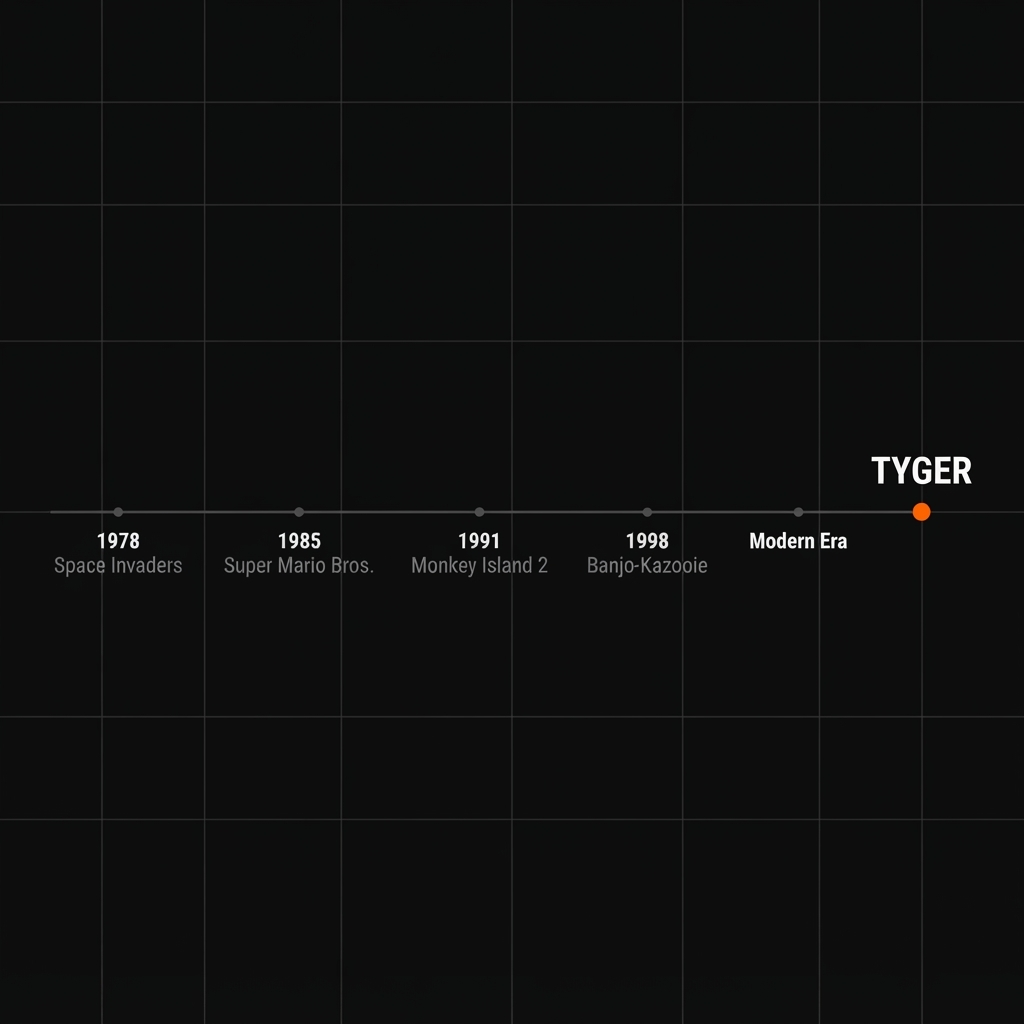
Adaptive music is music that changes based on what's happening in a game. It speeds up when things get tense, adds layers when a fight starts, and pulls back when you're exploring. It sounds like a modern idea, but game developers have been doing it for almost fifty years.
This page owes a lot to Ronny Mraz's history of adaptive music in video games on the Splice blog. Ronny is a technical sound designer who worked on Just Cause 4 and teaches video game scoring at NYU. If you want the deep version with gameplay breakdowns, read his piece. Here's the short version, and why we think the next chapter looks different.
It started in the arcade
Space Invaders (1978)
The first big example is also one of the simplest. In Space Invaders, the little four-note loop gets faster as you take out more aliens and they close in. No orchestra, no layers, just tempo. And it works. Your heart rate goes up with it.
Super Mario Bros. (1985)
Super Mario Bros. tied music to what the player was doing. Grab a Starman and the music switches. Hit the flag and you get a finish cue. Simple state changes, but it taught a whole generation that music could react to them.
Composers start building music to move
Monkey Island 2 and iMUSE (1991)
LucasArts built a system called iMUSE for Monkey Island 2. Instead of just swapping songs, the music could change at planned transition points, loop a section while waiting on the player, and bring parts in and out based on what happened. It worked a lot like a pit orchestra following the action on stage.
Banjo-Kazooie (1998)
Banjo-Kazooie made layering the main event. Each level's music was written in layers, and different layers faded in and out depending on where you were: underwater, in a cave, out in the open. It's the same song the whole time, just arranged differently for the moment. This is called vertical remixing, and it's everywhere in games now.
Modern games mix both approaches
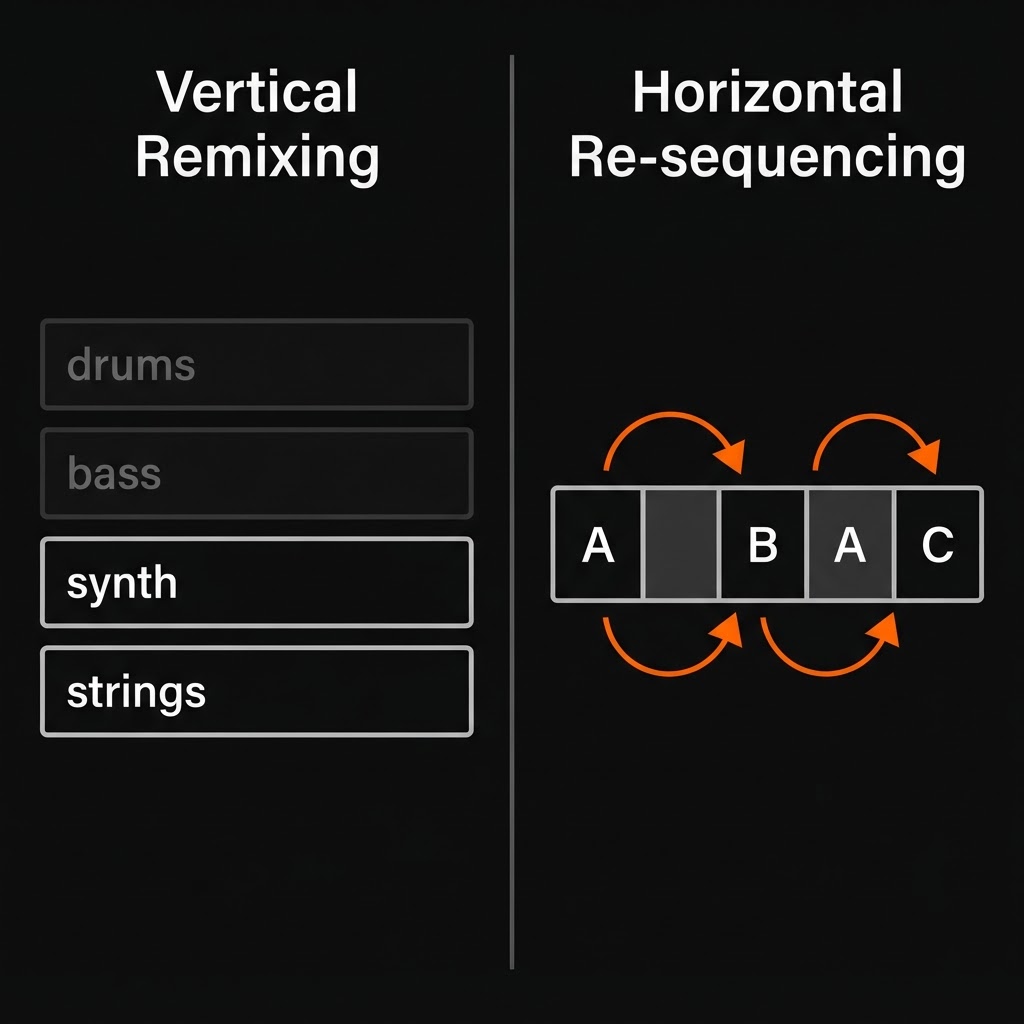
Today's big games combine two main techniques:
- Vertical remixing: adding or removing layers (drums, strings, synths) as intensity changes.
- Horizontal re-sequencing: jumping between sections of the music, like moving from a calm part to a big climax, based on what the player does.
Uncharted 2 builds intensity through layers as you move from exploring to sneaking to fighting. Final Fantasy XV and Destiny 2 rearrange sections on the fly so boss fights and missions feel scored. Just Cause 4 does both at once: how intense the fight is decides which section plays, and how many enemies are around decides how full the arrangement sounds.
Some games go even tighter. Killer Instinct syncs pieces of its music to finishing moves, locked to the beat. Ape Out has drum fills and cymbal crashes land when you smash through enemies. The music isn't just following the game, it's hitting with you.
The one thing adaptive music has never done
Every example on this page has something in common. The music was composed for that game, by composers who knew exactly how it would be used, built in layers and sections ahead of time so the system could move it around.
That's great for game soundtracks. But it means adaptive music has only ever worked with music made specifically for it. The songs you actually listen to, the artists you love, your playlists, have never been part of it. When you play your own music while gaming, you're back to 1978 minus the tempo change: a song that plays the same no matter what's happening.
Where TYGER comes in
TYGER takes the ideas game audio has been refining for decades and applies them to real songs from real artists, in real time, while you play.
- Vertical remixing, on real songs: TYGER can drop the vocals when you need to focus, or strip a song down to just drums and bass when tension is building.
- Horizontal re-sequencing, on real songs: TYGER can move to the biggest, highest-energy part of the song when the moment calls for it.
- Music that hits with you: land a headshot or win the round, and TYGER takes the song to its peak right then, the same idea Killer Instinct and Ape Out built by hand, now with the music you'd actually choose.
We don't generate music to do this. It's real recordings, adapted. Here's where we stand on generative AI music, and here's how TYGER works as an AI DJ for your games.
FAQ
Further reading
- Ronny Mraz, The history of adaptive music in video games, Splice. A deeper look at every game on this page, with gameplay and GDC talk breakdowns.